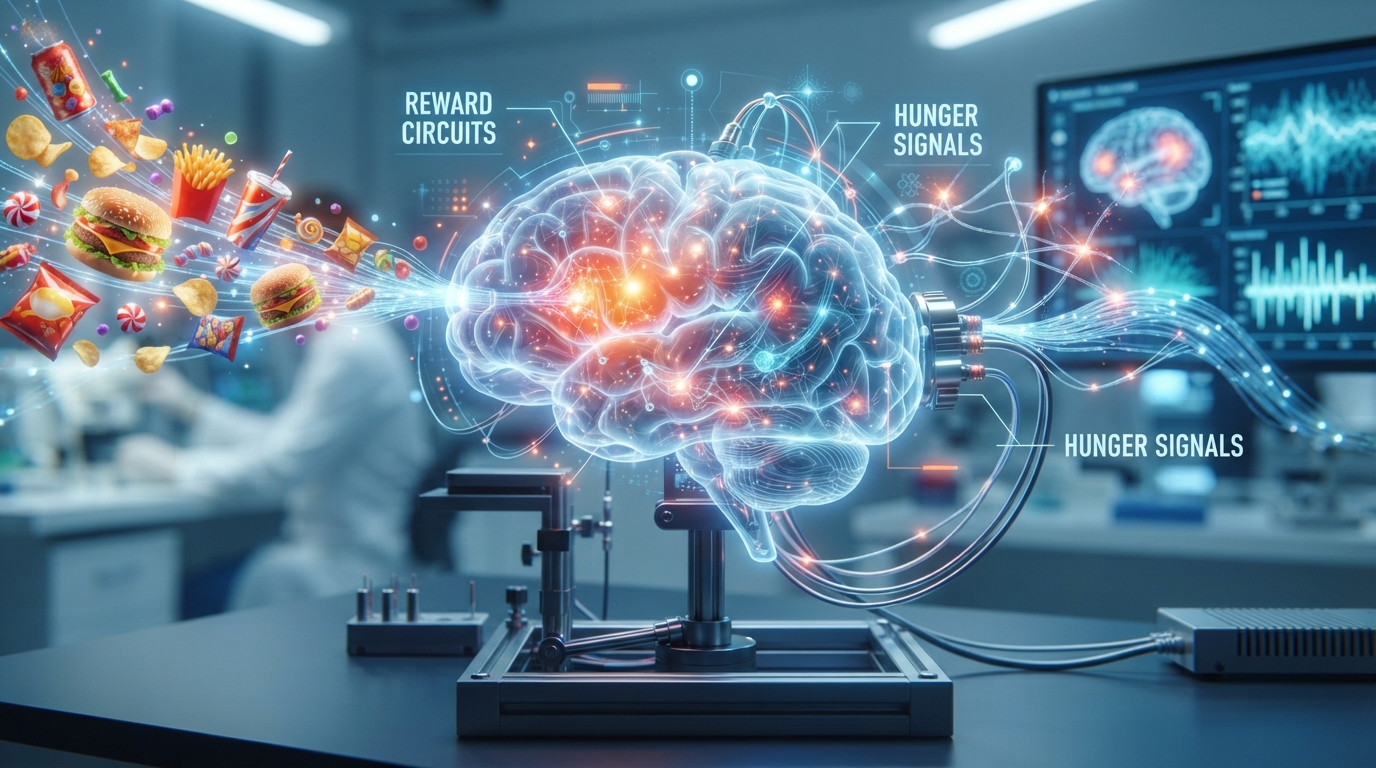
How much control do you really have over your eating habits? Despite your best intentions, does it feel like your cravings dictate your choices, leaving you confused and frustrated?
Context
As the prevalence of obesity and diet-related diseases rises, understanding the effects of our food choices has never been more urgent. Researchers are now uncovering how ultra-processed foods—those convenient, packaged items that often dominate our grocery shelves—can hijack our brain's natural responses to hunger and reward. This could explain why many struggle to stick to healthful eating patterns, even when they know it's in their best interest.
Expert Perspectives
Perspective: Dr. George A. Bray
Dr. Bray, a professor at the Pennington Biomedical Research Center, emphasizes the disconnect created by ultra-processed foods. According to him, these items are engineered to be hyper-palatable. "The sugar, fat, and salt combinations companies use not only make these foods addictive, but they can also rewire how we perceive hunger," he explains.
Dr. Bray further notes that excessive consumption of these foods can lead to a disregard for the body's natural hunger signals. "When your brain is constantly flooded with easy-to-access calories, it becomes desensitized to normal hunger cues, which can increase the frequency and quantities of food consumed."
Advertisements
Perspective: Dr. Mark Hyman
Dr. Hyman, founder of The UltraWellness Center, joins the conversation with a focus on the biochemical aspects of food consumption. He argues that industrial food processing strips nutrients from the original ingredients, leaving consumers craving more. "We are often drawn to these low-nutrient foods not just out of hunger, but out of nutritional deficits. When our bodies need nourishment, they signal us to eat; ultra-processed foods do not fulfill those nutritional needs," he notes.
Hyman advocates for a return to whole foods, emphasizing that they are vital for restoring our body's natural hunger cues. "Whole foods nourish us, satisfying our cravings and balancing our biochemistry. Ultra-processed foods disrupt this balance."
Perspective: Dr. David Ludwig
Dr. Ludwig, a professor at Harvard Medical School, adds another layer by discussing the role of reward circuits altered by ultra-processed foods. "The pleasure derived from these foods can create a cycle of cravings that feels insatiable. It's not merely willpower that's at stake; it's the very design of these products that works against our biology," he states.
He explains that the instantaneous gratification people find in sugary snacks and fast food can result in long-term changes in brain function. "Once these reward pathways are activated, we find ourselves wanting more—leading to a compulsive consumption pattern that feels beyond our control."
Editorial Synthesis
Where Experts Agree
- Hyper-Palatable Nature: All experts agree that ultra-processed foods are engineered to be enticing, leading to increased consumption.
- Biodiversity of Nutrition: The nutritional void left by ultra-processed foods affects hunger signals and cravings.
- Brain Mechanisms: There is a consensus that consumption patterns are influenced by brain reward systems that can be altered by diet.
Where Experts Disagree
- Willpower Focus: Dr. Bray and Dr. Ludwig see the problem as largely biochemical and neurological, while Dr. Hyman accentuates nutrition's role in willpower.
- Solutions: While Dr. Hyman advocates for a strict whole-food approach, Dr. Bray suggests a more gradual shift away from processed options may be more realistic for some.
Why This Matters
Understanding how ultra-processed foods manipulate our brain chemistry is crucial. It addresses the frustration many people face when they struggle with weight loss or healthy eating habits. Instead of blaming a lack of willpower, it's time to acknowledge how the food environment significantly shapes our behaviors.