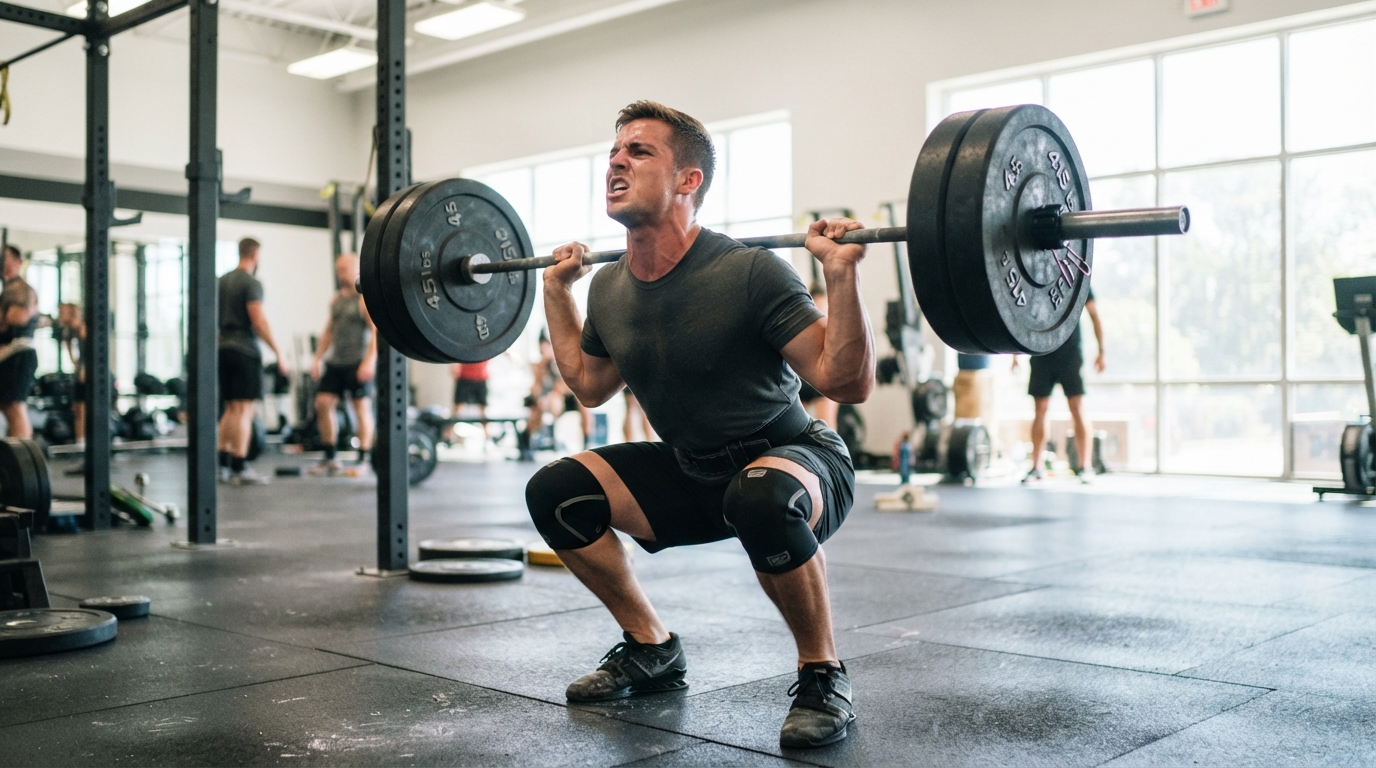
Opening Question
Have you ever considered that your breath might be holding you back from lifting more? While most lifters focus on weights, sets, and reps, the way you breathe can directly impact strength and performance. In this article, we'll explore how proper respiratory mechanics can lead to immediate gains in your lifts as experts discuss the science behind breathing and its importance in strength training.
Context: Why This Matters Now
As fitness enthusiasts and athletes continue to seek ways to optimize performance, breathing often takes a back seat. Recent research underscores its potential transformative role in physical training. Breathing isn't just a natural process; it's a skill that can genuinely affect exercise outcomes. The shift toward looking deeper into breathing techniques comes at a crucial time where improved performance is needed more than ever in sports and everyday activities alike.
Perspective: Dr. Belisa Vranich
Dr. Belisa Vranich, a clinical psychologist and breathing expert, argues that breathing mechanics can lead to significant strength gains. "Many lifters operate under chronic stress, which leads to shallow breathing," she explains. "This can restrict oxygen flow and lower your overall power."
Dr. Vranich advocates for diaphragmatic breathing, which allows for deeper, more efficient breaths. "When you're lifting, the core stabilizes your body. A strong diaphragm supports intra-abdominal pressure, aiding in more efficient lifts," she notes. She suggests that modifying one's breathing pattern could be the simplest way to boost lifting capability, potentially adding up to 10% more on each lift overnight.
Perspective: Patrick McKeown
Breathing biomechanist Patrick McKeown echoes Dr. Vranich's sentiments and emphasizes the psychological side of breathing. "Your breath is a bridge between your body and mind," he says. "Improper breathing lets anxiety creep in and can negatively impact your performance." McKeown's emphasis is on nasal breathing, reinforcing the importance of maintaining a calm and focused mindset during lifts.
He posits that by improving breathing patterns, athletes not only optimize oxygen uptake but also create a mental state conducive to high performance. McKeown recommends integrating breathing exercises into daily routines, such as box breathing or Buteyko methods, to enhance performance during workouts.
Perspective: Dr. Andrew Huberman
Neuroscientist and professor Dr. Andrew Huberman takes a more scientific angle regarding breathing's impact on performance. "Breathing influences the autonomic nervous system, which regulates your fight-or-flight response," he explains. Dr. Huberman emphasizes the role of breath in regulating stress and improving focus. "When you optimize your breathing techniques, you can control anxiety levels, enhancing attention and physical readiness."
His approach focuses on the interplay between breathing and cognitive function, suggesting that proper respiratory techniques before and during lifts can prime the body for maximum effort. "It's evident that controlled breathing not only supports physical performance but also aligns the mind for the task at hand," he concludes.
Editorial Synthesis
Where Experts Agree
- Proper breathing improves performance by boosting oxygen flow and stabilizing the core.
- Diaphragmatic and nasal breathing can enhance both physical and psychological readiness.
- Breathing techniques can be learned and improved, leading to immediate benefits in lifting.
Where Experts Disagree
- The exact percentage of performance enhancement achievable through breathing techniques is still debated.
- Some experts suggest varying breathing patterns for different lifts, while others advocate for a uniform technique.