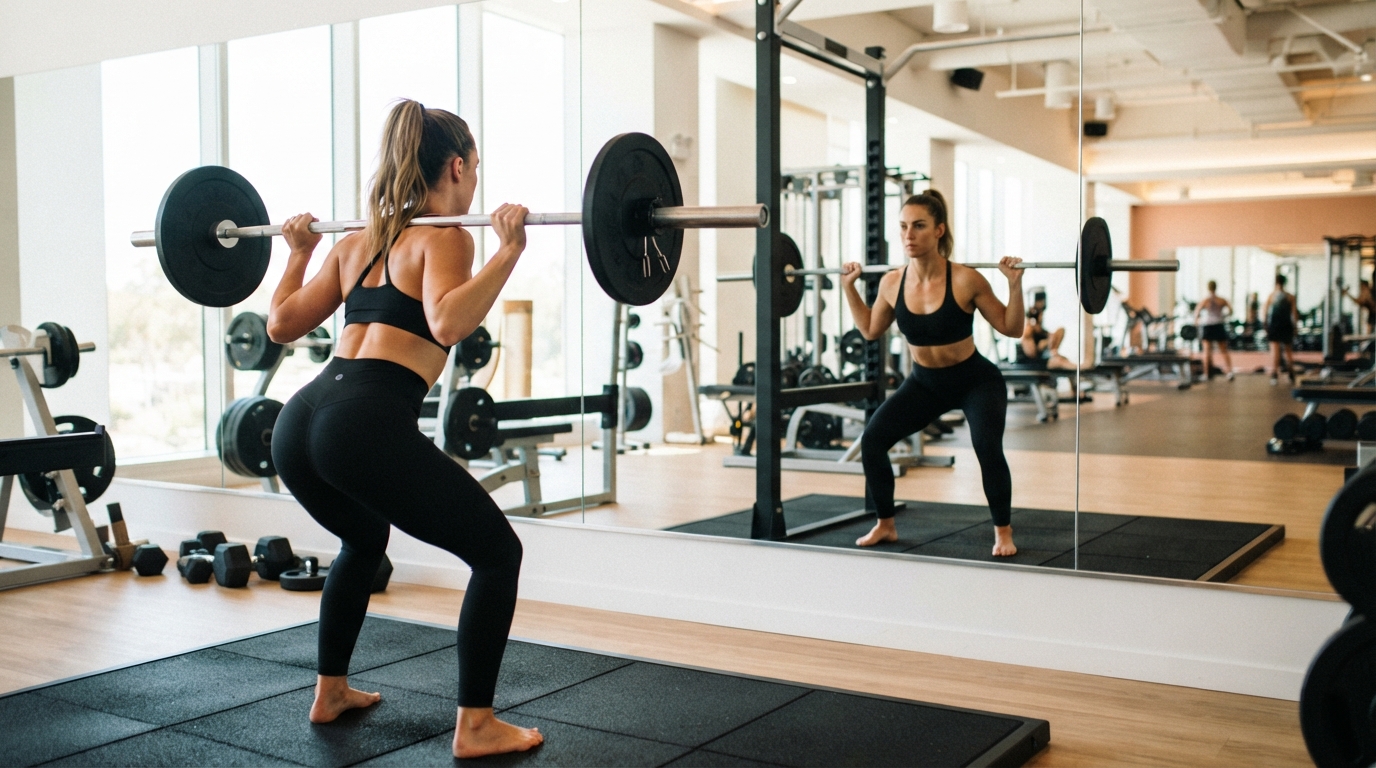
Does Training in Front of a Mirror Enhance or Hinder Your Workout Progress?
The incorporation of mirrors in gyms has become standard, but do they actually help or hurt our fitness journey? As you lift weights or engage in dynamic movements, that reflective surface holds significant implications not just for your form, but also for your self-perception and focus. Understanding the "mirror effect" can provide critical insights into how we approach our training routines, particularly as fitness culture continues to evolve.
Why This Matters Now
With the increasing awareness of mental health in fitness and the importance of form in injury prevention, the effectiveness of mirrors in training environments is being scrutinized. As more individuals focus on holistic approaches to wellness, the role of self-perception becomes pivotal—not just how you look, but also how you feel during your workout. The COVID-19 pandemic led many to work out at home, prompting questions about environment and performance. As gyms reopen and reshape their spaces, these discussions are more relevant than ever.
Perspective: Dr. Stuart McGill
Dr. Stuart McGill, Professor Emeritus of Spine Biomechanics at the University of Waterloo, asserts that mirrors can play a functional role in ensuring proper form.
- Form Correction: According to McGill, mirrors allow athletes to self-correct during their movements, providing instant visual feedback. This is particularly crucial for exercises where alignment is key, such as squats and deadlifts. Correct posture not only enhances performance but also reduces injury risk.
- Spinal Health Considerations: McGill emphasizes that maintaining a neutral spine is fundamental. Mirrors help lifters monitor their spine position, facilitating better biomechanics under load. While performing complex lifts, adjusting on the fly can mitigate the risk of developing injuries associated with poor form.
Perspective: Dr. Jessi Haggerty
Dr. Jessi Haggerty, a physiotherapist and sports performance coach, takes a more nuanced view, pointing out potential drawbacks to heavy reliance on mirrors.
- Cognitive Engagement: Haggerty argues that concentrating too much on one's reflection might detract from the mental engagement required in movement patterns. Instead of focusing on the internal cues that signal proper form (i.e., muscle contractions and joint positions), mirrors can encourage superficial assessments.
- Self-Perception Issues: She also highlights that constant visual assessments can lead to a skewed self-image, particularly for those struggling with body image issues. This, she argues, might result in less motivation to train if participants obsess over how they look rather than the functional aspects of movement.
Perspective: Mark Rippetoe
Mark Rippetoe, a well-known strength coach and author, advocates for a judicious approach to mirror use in training.
- Learning Through Internal Cues: Rippetoe suggests that beginners should build their base of strength and learn form through feedback from coaches rather than relying solely on mirrors. He argues that excessive dependence on external feedback can lead to misguided adjustments instead of natural body learning processes.
- Encouraging Independence: Furthermore, Rippetoe underscores the importance of developing a training mentality that does not rely on appearance. The mirror effect can become too focused on vanity metrics, diverting attention away from strength gains and the joy of performance.
Editorial Synthesis
Where Experts Agree
- Self-Correction: All three experts agree on the value of mirrors for self-correction, especially for beginners who might be learning proper lifting mechanics.
- Form and Safety: They also concur that proper form reduces the risk of injury, a key consideration in any training program.
Where Experts Disagree
- Focus and Engagement: McGill sees the mirror as a useful tool for immediate feedback, whereas Haggerty is concerned about the potential for cognitive distractions. Rippetoe advocates for initial training without mirrors to strengthen reliance on internal cues.
- Perception Versus Performance: Haggerty raises concerns about body image, while McGill and Rippetoe emphasize performance gains, suggesting they view the mirror's role differently.
Why This Matters
The discourse surrounding the mirror effect illustrates a deeper truth about training: it is not just about what you do, but how you feel while doing it. As you weigh your options regarding mirror use in your training, consider the impact on both your form and your mindset. The goal should be a balanced approach that utilizes mirrors for immediate form feedback while cultivating a strong internal focus.
As training methods and environments evolve, the feedback that mirrors provide must be seen through a lens that values both aesthetic and functional improvement. Coaches and trainers should aim to guide their clients in becoming self-aware, informed athletes—merging the insights gleaned from mirrors with the powerful internal feedback that drives meaningful progress.