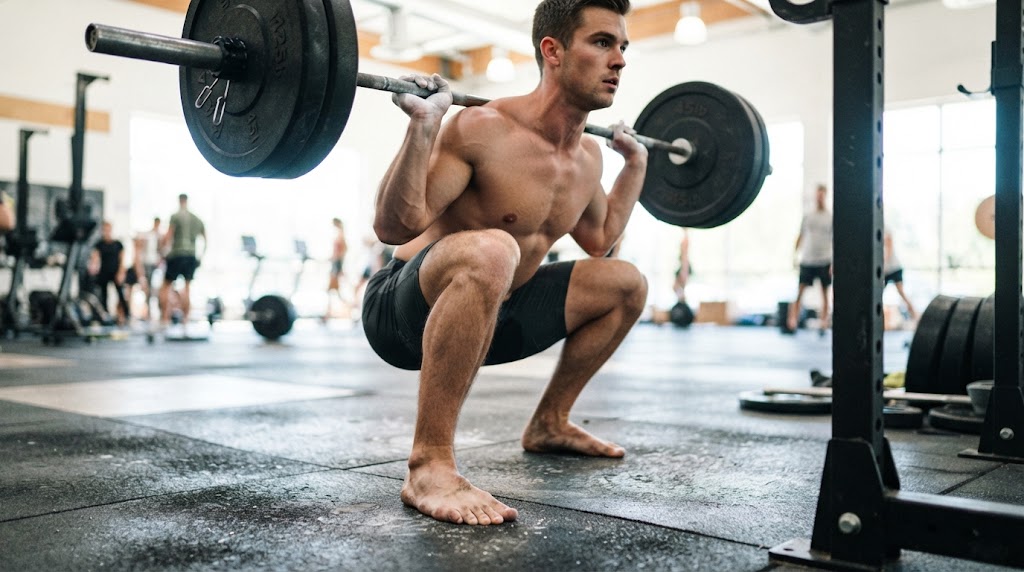
Are Your Feet Holding You Back?
When was the last time you thought about the role your feet play in your overall lifting performance? Often ignored, our feet are the foundation of nearly every movement we perform in the gym. Yet, many lifters focus solely on major muscle groups, overlooking the intricate network of muscles in the feet and lower legs that impact strength, stability, and mobility. This article aims to highlight why investing time in training your feet can enhance your lifting routines and safeguard you against injuries.
Why This Matters Now
Recent research has drawn attention to the significance of foot strength and function in athletic performance. With an increasing number of people engaging in high-intensity training and heavier lifts, neglecting a key muscle group can lead to imbalances and suboptimal performance. As experts advise, your feet are more than just a point of contact with the ground; they play a critical role in how efficiently and effectively you complete lifts.
Expert Perspectives
Perspective: Dr. Ben Cormack (Physiotherapist and Movement Specialist)
Dr. Cormack emphasizes the importance of foot mechanics in overall body function. He states, "The feet have a direct connection to the kinetic chain; any weakness here can create a ripple effect." He suggests that strengthening the muscles in the feet through exercises like toe curls and foot marbles can lead to better stability, ultimately improving lifts like squats and deadlifts.
He highlights how common issues like pronation or supination can lead to compensatory patterns in the hips and lower back. By addressing foot strength, lifters can create a more stable base, leading to improved performance and reduced injury risk.
Perspective: Dr. Emily Splichal (Podiatrist and Author)
Dr. Splichal offers a more granular perspective, focusing on how the foot functions as a dynamic structure. "Your foot is a complex system; it's designed to adapt to different surfaces and loads." According to her, many lifters underestimate the need for a balanced workout regimen that includes intrinsic foot muscles, which play a crucial role in balance and stabilization.
She recommends incorporating exercises such as barefoot walking, resistance band training for the foot, and balance work to develop the small muscles that often go neglected. "A well-rounded foot training routine leads to optimized lower body performance," she says, pointing to studies showing improved proprioception and force generation in athletes who train their feet.
Perspective: Dr. Kelly Starrett (Physical Therapist and Coach)
In his practical approach, Dr. Starrett connects foot training to overall physical resilience. "A strong foot leads to a strong body. If you're serious about lifting heavy, you can't ignore your feet." He notes that many lifters may have sufficient upper body strength yet struggle with lower body lifts due to weak feet. He advocates for simple drills like calf raises and banded lateral walks to improve foot strength and activate hip musculature.
Starrett argues that foot health extends beyond lifting; proper foot mechanics prevent knee and back injuries. He encourages lifters to not only include foot exercises in their routine but to also prioritize mobility work that affects the feet each training session.
Editorial Synthesis
Where Experts Agree
- Training the feet improves overall stability and strength in lifts.
- Exercises should target both intrinsic and extrinsic muscles.
- Foot health is critical for injury prevention, affecting the entire kinetic chain.
Where Experts Disagree
- The extent to which foot training should be prioritized in a lifter's regimen varies among experts.
- Some experts emphasize dynamic foot exercises, while others advocate for more passive forms of strength-building.
Why This Matters
Incorporating foot training into your routine is not just an add-on; it can be transformative. By engaging with the often-overlooked muscles of the feet, you enhance your foundation for powerlifting, Olympic lifting, and general fitness activities. A dedicated approach to foot strength and mobility can lead to significant improvements in your lifting abilities while reducing the risk of injury.