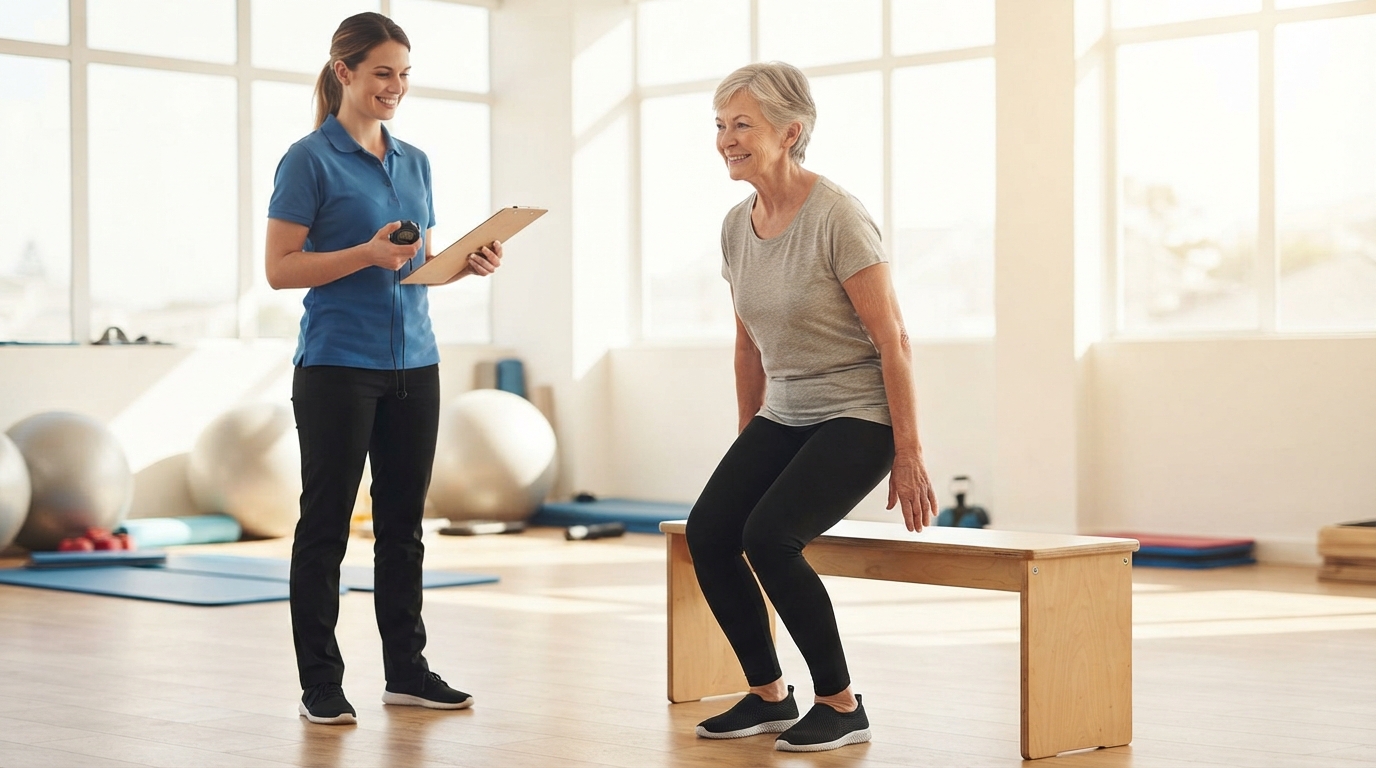
Most of us go through our annual check-up, feeling that we've done our part in monitoring our health. But what if a simple test, lasting only 90 seconds, could provide a more telling snapshot of our physical future? Enter the Sitting-to-Standing Test, a straightforward measure that can speak volumes about our mobility, flexibility, and even our longevity.
Why This Matters Now
As we age, various studies indicate an increased risk of falls, chronic diseases, and overall decline in quality of life. According to research published by leading physiologists and health organizations, maintaining mobility is crucial for longevity. We must understand not just the results of our blood tests, but also how well we can move. As Dr. Michael Greger emphasizes, movement is life; if we're not moving well, we're not living well. In today's sedentary lifestyle, addressing mobility becomes more essential than ever.
The Sitting-to-Standing Test Explained
The Sitting-to-Standing Test is a simple functional assessment. Here's how it works: from a seated position, you stand up, then sit back down, and repeat the process several times (typically five). The key factors this test assesses include:
- Strength: of the legs, which is vital for overall mobility.
- Balance: an essential skill in preventing falls.
- Coordination: necessary for the complex movements involved in daily activities.
Let's explore what experts think about the importance of this test.
Perspective: Dr. David P. Walsh
Dr. Walsh emphasizes that the Sitting-to-Standing Test serves as a clear indicator of functional capacity. "This test is invaluable for evaluating not just current physical health but potential risks down the line. A decline in one's ability to stand signifies a decline in overall health," he notes. He points out that individuals who struggle with this test often show early signs of muscle atrophy and decreased cardiovascular fitness. "This assessment can serve as a wake-up call," Dr. Walsh adds.
Perspective: Dr. Kelly Starrett
As a renowned coach, Dr. Starrett focuses on movement quality. He argues that the way in which someone performs the Sitting-to-Standing Test reveals a lot about their biomechanics. "It's not just about completing the test; it's about how you do it. Poor mechanics not only indicate weakness but can lead to injuries during daily activities. We need to promote movement that is efficient and safe," he asserts. He notes that consistent practice in standing up and sitting down can help develop the requisite strength and coordination.
Perspective: Dr. Michael Greger
Dr. Greger, a well-known dietitian and author, emphasizes a holistic view on health. "While nutrition is key, the Sitting-to-Standing Test complements it by making sure that the body is physically capable of acting on a healthy diet. Without movement, nutrients cannot be utilized effectively," he explains. He believes this test is especially crucial as we age, insisting that maintaining our musculoskeletal system is vital to our overall health.
Editorial Synthesis
Where Experts Agree
- Mobility is Critical: All three experts recognize that maintaining mobility is essential for overall health and reducing age-related declines.
- Functional Assessment: The Sitting-to-Standing Test serves as a valuable functional assessment of physical capacity.
- Risk Indicator: A decrease in performance on this test can signify a range of health issues, including muscle atrophy and cardiovascular decline.
Where Experts Disagree
- Focus on Mechanics vs. Nutrition: Dr. Starrett emphasizes movement quality, while Dr. Greger argues for the supportive role of nutrition in facilitating movement.
- Frequency of Testing: While Dr. Walsh suggests regular assessments, Dr. Greger recommends coupling the test with consistent nutrition improvements.
Why This Matters
In a world where many individuals prioritize quarterly blood tests and yearly physicals, the simplicity of the Sitting-to-Standing Test highlights an often-overlooked aspect of health—mobility. The implications of failing this simple test can be profound, ranging from a higher risk of chronic conditions to an increased chance of falls.
By integrating the Sitting-to-Standing Test into your routine, you can gain insights that may be absent from your typical medical exams. Not only can it improve your physical health, but it can also motivate you to take preventative measures. Building strength, improving balance, and fostering coordination through daily practice could be transformative.
Investing just 90 seconds can potentially alter the trajectory of your health—in ways that a regular check-up cannot catch. By prioritizing both movement and nutrition, as championed by experts like Walsh, Starrett, and Greger, we can enhance our quality of life, ensuring we don't just live longer but also live better.