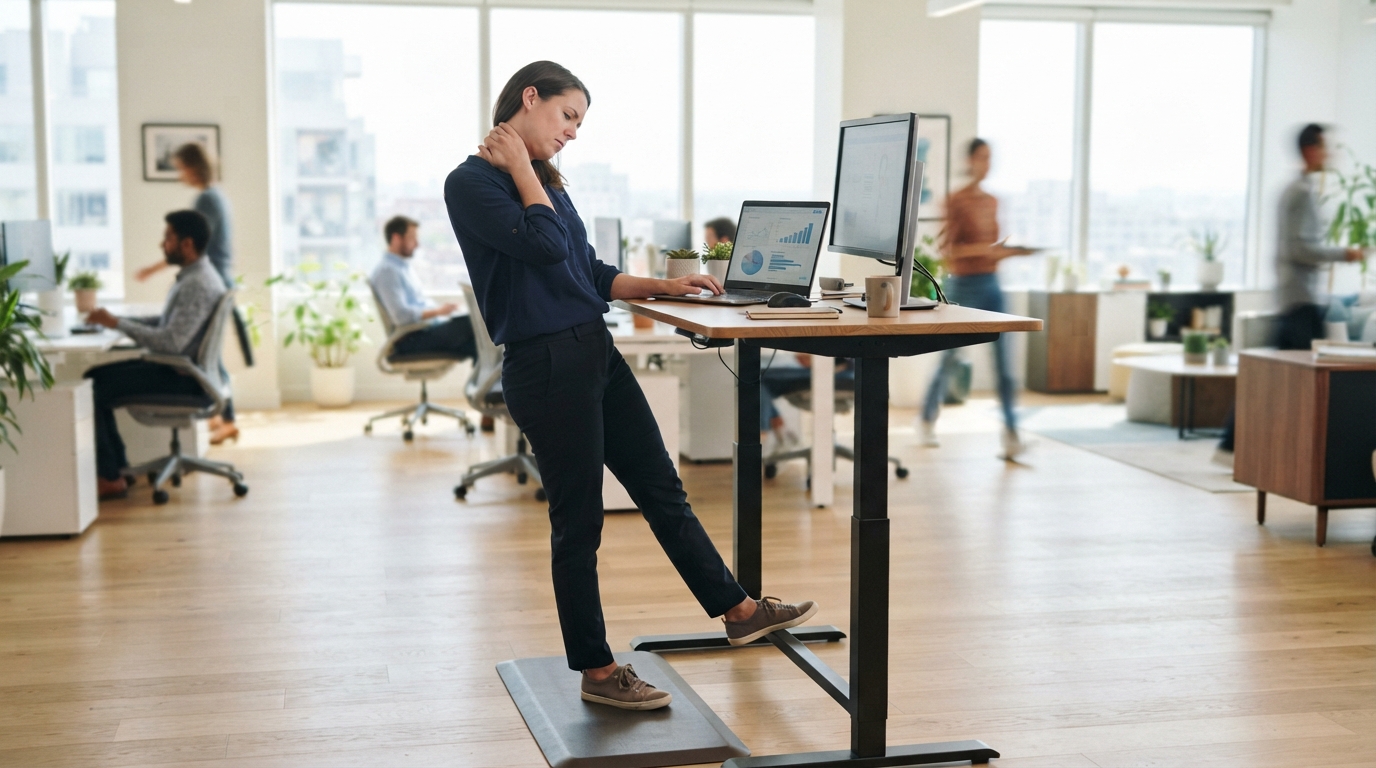
Are standing desks the answer to the health issues caused by prolonged sitting, or are they just a different set of problems waiting to happen?
Context
As remote work becomes more prevalent, many have turned to standing desks in an effort to combat the negative health impacts associated with sitting all day. While the initial intent is to promote movement and improve health outcomes, emerging research suggests that simply swapping chairs for standing is not the panacea it was hoped to be. Understanding this nuance is crucial for creating a sustainable work environment that fosters both productivity and well-being.
Expert Perspectives
Perspective: Dr. Alan Hedge (Professor of Ergonomics)
Dr. Alan Hedge emphasizes the importance of movement over merely standing. According to him, the assumption that standing all day is inherently healthier than sitting can be misleading. "The goal should not be to replace one static position with another, but to create a dynamic work environment," he states. Research shows that prolonged standing can lead to various physical issues such as joint pain and circulatory problems, undermining the supposed benefits of reduced sitting time.
Dr. Hedge advocates for a mix of positions throughout the day. He recommends the use of adjustable desks that allow for both sitting and standing while encouraging regular breaks to walk or stretch. He highlights that what matters most is the overall pattern of movement rather than the mere act of standing.
Perspective: Catherine O'Brien (Health Coach)
From a health coaching standpoint, Catherine O'Brien underscores the psychological and physical implications of standing desks. She believes that the novelty of standing desks can wear off, leading to fatigue and discomfort if not combined with intentional movement. O'Brien notes, "People often misuse standing desks, maintaining poor posture for hours, leading to back and shoulder issues."
Catherine suggests incorporating exercises that can be performed at standing desks, such as calf raises or simple stretches. This helps break the monotony and counteracts the adverse effects of prolonged standing. She also recommends setting reminders to move around every 30 minutes as a practical solution.
Perspective: Dr. Joerg Huber (Physiotherapist and Researcher)
Dr. Joerg Huber provides a clinical perspective, focusing on musculoskeletal issues associated with both sitting and standing. His research highlights that while standing may reduce some risks tied to sedentary behavior, it can increase others. He notes, "Standing for long periods can lead to conditions like varicose veins and lower back pain, particularly if ergonomic principles are not followed."
To mitigate these risks, Dr. Huber stresses the importance of desk ergonomics, such as keeping screens at eye level and maintaining a neutral wrist position while typing. He advocates for a balanced approach, where transitioning between sitting, standing, and moving throughout the day is the ideal scenario.
Editorial Synthesis
Where Experts Agree
- Movement is essential: All experts emphasize the importance of incorporating movement into your workday, rather than remaining static.
- Ergonomics matter: Proper desk setup can help prevent discomfort whether sitting or standing.
- Regular breaks are beneficial: Taking breaks to stretch or walk, no matter the position, can enhance overall well-being.
Where Experts Disagree
- Standing as a solution: Dr. Hedge and Dr. Huber are cautious about the benefits of standing all day, while Catherine advocates for mindful standing combined with movement.
- Practical application of standing desks: There are differing opinions on the effectiveness of standing desks without a comprehensive movement strategy versus more traditional work setups.
Why This Matters
Understanding the standing desk paradox is vital in today's workplace. Relying solely on standing desks may not be the solution it appears to be. Instead, addressing sedentary behavior by promoting a diverse range of movement and ergonomic practices is necessary.
Transitioning between sitting, standing, and moving can maximize health benefits while minimizing risks associated with either position. The key takeaway here is to focus on a balanced approach that encourages regular movement and acknowledges the importance of good ergonomics, regardless of whether you are sitting or standing. Only then can you truly optimize your work environment for both health and productivity.