Advertisements

Not every bad workout means you need to stop training—but persistent fatigue, declining performance, soreness, and dread can signal that your body needs less, not more.…

Perfectionism can look like discipline, but in fitness and nutrition it can become a form of avoidance. Waiting for the perfect workout, the perfect meal plan,…

Sleep is often treated as secondary to training and nutrition, but recovery is where much of the adaptation from training actually happens. Consistently inadequate sleep can…

The environment where you train can influence how effectively you train. Loud music, crowded spaces, conversations, and the feeling of being watched can all compete for…

The first 10 minutes of a workout are more than a prelude—they can shape everything that follows. A well-designed warm-up prepares the body, reinforces movement quality,…

Long-term fitness isn't built by forcing habits—it's built by becoming the kind of person who naturally makes healthy choices. Instead of relying on motivation or discipline…

Training harder doesn't always produce better results. Research increasingly shows that consistently training at around 80% of your maximum effort can improve performance, reduce injury risk,…
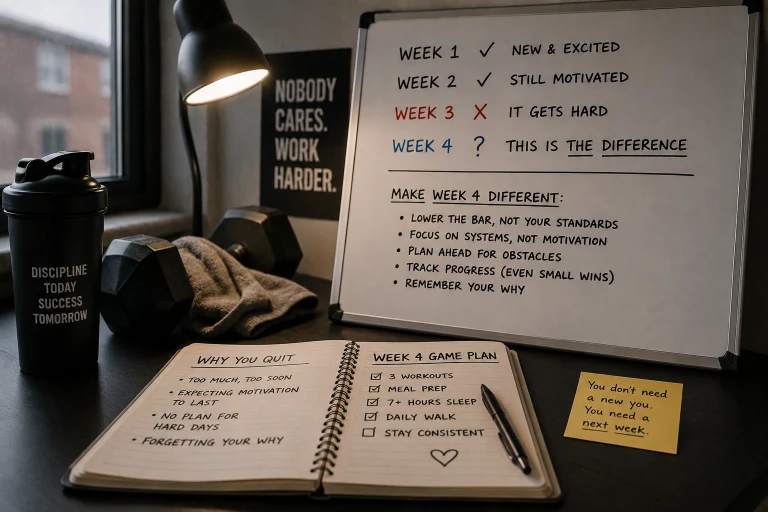
Week Three is where motivation fades and habits are put to the test. The excitement of starting something new wears off before real results appear, making…
