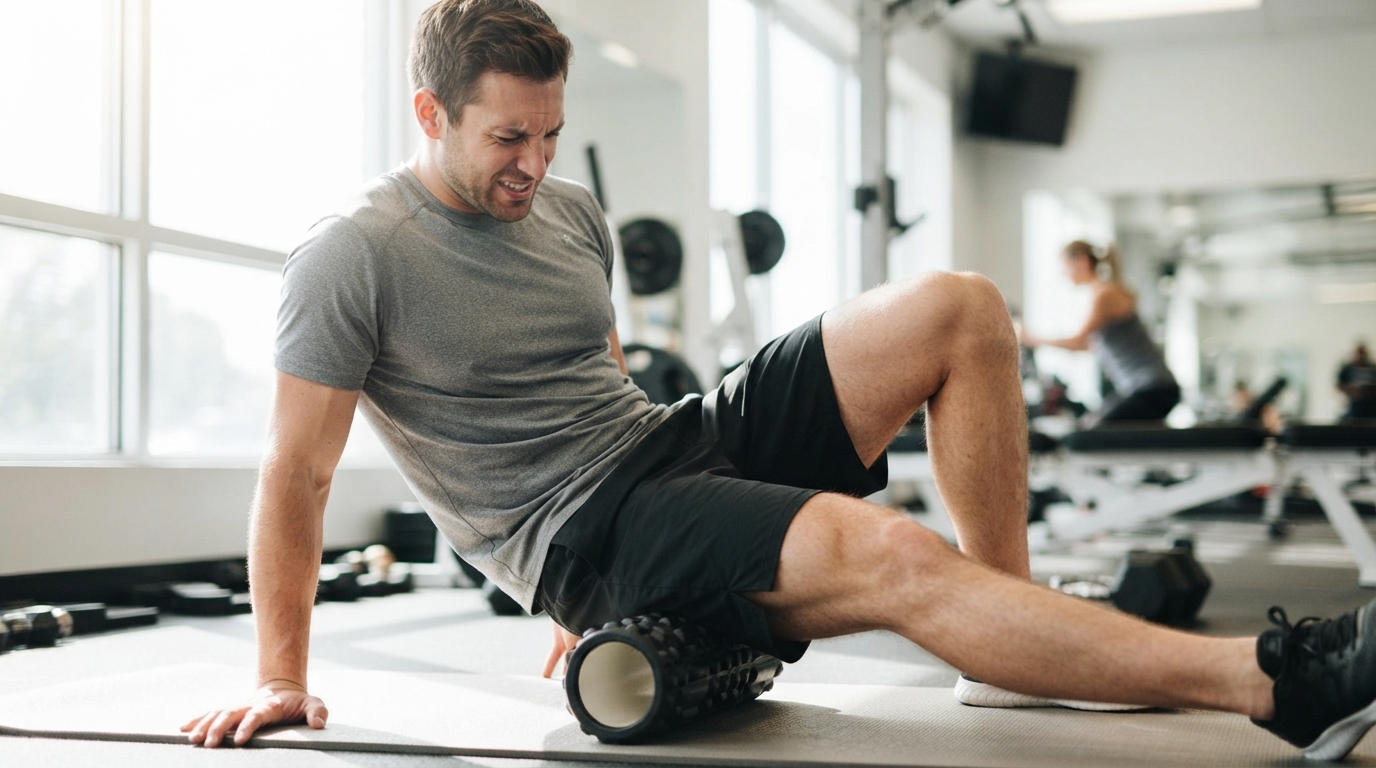
What do you feel after a good foam rolling session? Relief? Soreness? Or maybe just a raised eyebrow as you wonder if the time could have been better spent? In fitness circles, foam rolling has been touted for its potential benefits, yet the science behind it is somewhat murky. As we explore whether foam rolling works, we delve into insights from leading experts in the field.
Context
In today's exercise landscape, foam rolling is often proposed as a remedy for muscle soreness, tightness, and even post-workout recovery. With so many athletes and gym-goers investing time and money into foam rollers, understanding the science becomes crucial—not only for optimizing performance but also for making informed decisions about training routines. The last decade of research presents a mixed bag of findings that deserves a thorough review.
Expert Perspectives
Perspective: Dr. Chad Wesley Smith
Dr. Chad Wesley Smith, CEO of Juggernaut Training Systems, emphasizes the practical application of foam rolling. He acknowledges that while foam rolling can lead to transient increases in flexibility and decrease in muscle soreness, it may not be a magic bullet.
"Foam rolling can be a helpful tool for some, especially if used correctly as part of a broader warm-up or recovery strategy. But it's not going to replace good movement patterns or strength training. It's an adjunct, not a solution."
Dr. Smith argues that foam rolling might be most effective for athletes looking to temporarily alleviate discomfort before an event rather than as a standalone recovery solution.
Perspective: Dr. Mike Reinold
Dr. Mike Reinold, a physical therapist and co-founder of Champion PT and Performance, takes a more conservative approach. He sees foam rolling as a method that can facilitate short-term gains in performance but also warns against over-dependence.
"It can serve a purpose in terms of preparing muscles for activity or aiding recovery. However, the real key lies in understanding each individual's biomechanical needs and personalizing the application."
Reinold stresses that foam rolling should not replace fundamental rehabilitation processes or individualized rehab exercises. For him, foam rolling is one of several tools in the toolbox of performance enhancement.
Perspective: Dr. Brad Schoenfeld
Dr. Brad Schoenfeld, professor at Lehman College and a noted researcher in exercise science, brings a research-based lens to the discussion. His studies often indicate that while there are benefits to foam rolling, they might not be as pronounced as some believe.
"The evidence shows that foam rolling can lead to acute benefits like improved flexibility and tenderness reduction, but we need to be cautious about assuming long-term benefits from it. Recovery encompasses much more than just foam rolling."
Dr. Schoenfeld advocates for a comprehensive approach to recovery that includes various modalities, emphasizing that foam rolling is merely one potential component among many.
Editorial Synthesis
After reviewing the expert insights, a clearer picture of foam rolling emerges.
Where Experts Agree
- Transient benefits: Foam rolling can provide temporary improvements in flexibility and reduced muscle soreness.
- Complementary tool: It is best used in conjunction with other training and recovery methods.
- Individual variability: Responses to foam rolling can vary greatly depending on the individual.
Where Experts Disagree
- Long-term effectiveness: There's debate on whether foam rolling offers sustained benefits over time.
- Application purpose: Some experts advocate focusing on personal biomechanics, while others see it primarily as a warm-up tool.
- Replacement for other methods: Opinions differ on the adequacy of foam rolling as a substitute for strength training or rehabilitation exercises.
Why This Matters
Understanding the nuances of foam rolling helps to decide its place in a fitness routine. While it may provide acute relief and serve as part of a pre-activity regimen, relying solely on foam rolling could be misguided. The real value lies in integrating foam rolling thoughtfully into a comprehensive training and recovery strategy.
As fitness practices evolve, so must the methods we incorporate. Foam rolling may not be a magic solution, but when used strategically, it can play a role in optimizing both performance and recovery. Ultimately, the choice should be about what truly benefits your body and aligns with your fitness goals.
In the world of fitness, evidence should guide practice. Whether you find value in foam rolling is a question worth exploring—not just for athletes, but for anyone striving for physical well-being.