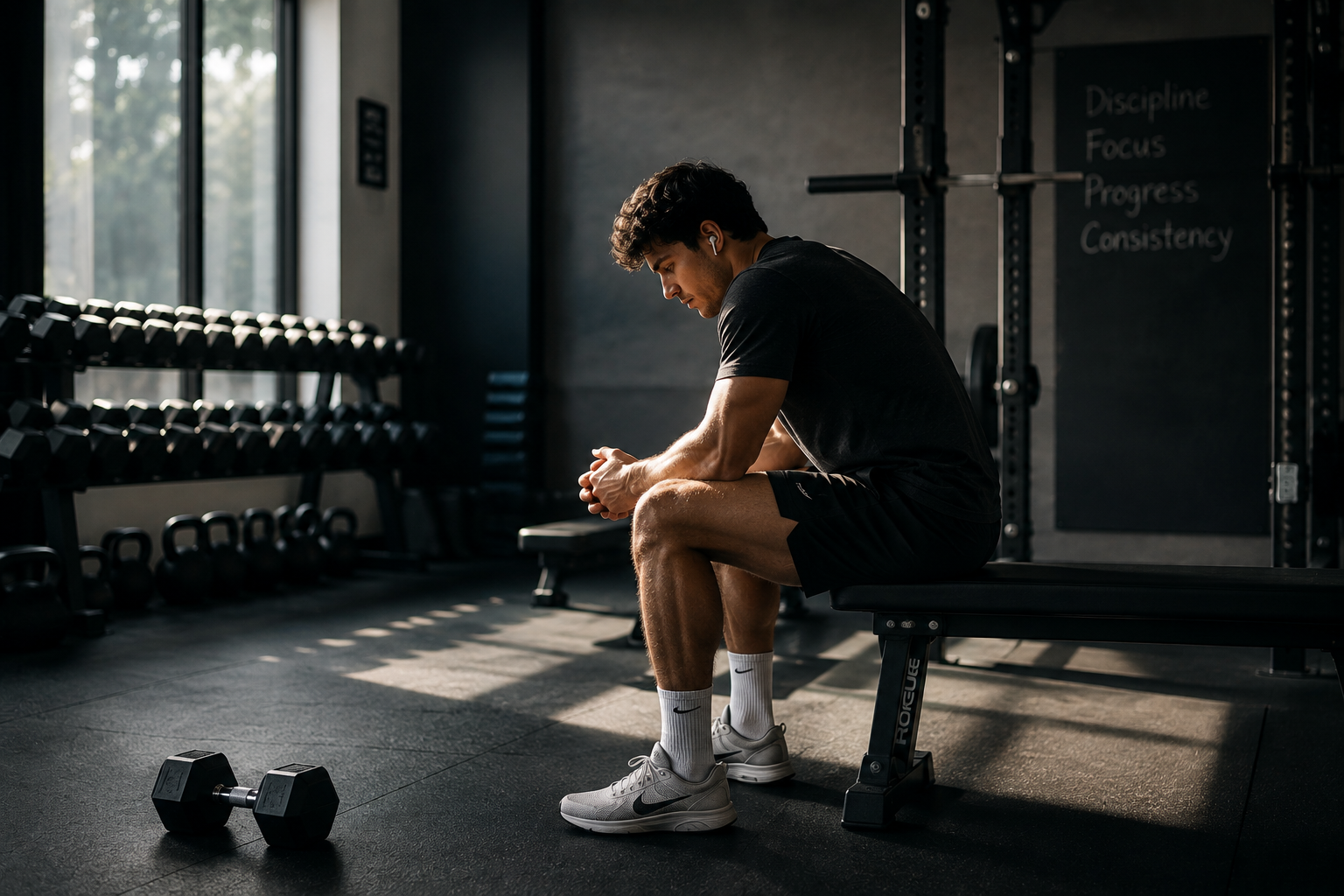
Opening Question
Is training alone holding you back—or helping you become a better athlete?
Group workouts and training partners are often praised for their motivation and accountability. Yet many experienced lifters and coaches argue that solo training offers unique advantages that are easy to overlook.
As research continues to highlight the importance of focus, consistency, and self-regulation, training alone deserves a closer look.
Why This Matters Now
Modern workouts are filled with distractions—from phones and social media to crowded gyms and constant conversation.
For anyone pursuing long-term progress, the ability to stay present during training may be just as valuable as the program itself.
Solo workouts remove many external distractions, allowing athletes to concentrate on technique, effort, and personal goals without comparison or interruption.
Expert Perspectives
Nick Tumminello: Autonomy Improves Focus
Strength coach Nick Tumminello believes one of the greatest benefits of training alone is complete control over the session.
Without feeling pressured to match someone else's pace or impress training partners, lifters can focus entirely on movement quality, exercise execution, and progression.
According to Tumminello, solo sessions encourage greater self-awareness.
By paying closer attention to performance, recovery, and technique, individuals become better at adjusting their programs based on what their bodies actually need instead of reacting to external expectations.
Dr. John Berardi: Accountability Starts With Yourself
Nutrition expert Dr. John Berardi argues that training alone strengthens intrinsic motivation.
Without relying on someone else to show up or push through difficult sessions, individuals learn to take full ownership of their habits.
This sense of personal responsibility often extends beyond the gym.
Berardi suggests that people who consistently train alone frequently become more intentional about nutrition, recovery, and long-term goal setting because their progress depends almost entirely on their own decisions.
Rather than following someone else's pace, they learn to define success according to their personal objectives.
Brett Bartholomew: Independence Builds Resilience
Performance coach Brett Bartholomew recognizes the motivational value of training partners but believes solo training develops an entirely different skill set.
Training alone forces athletes to navigate discomfort without external encouragement.
Instead of depending on someone else for motivation, they learn how to create it internally.
Bartholomew argues that this process builds resilience, adaptability, and confidence—qualities that remain valuable both inside and outside the gym.
Learning how to self-correct, adjust workouts, and stay disciplined without supervision prepares athletes for long-term success.
Editorial Synthesis
Where Experts Agree
Despite their different perspectives, the experts share several common conclusions.
They agree that:
- Training alone improves focus and reduces distractions.
- Solo workouts encourage greater personal accountability.
- Independence helps athletes better understand their own strengths and weaknesses.
- Consistency remains the biggest predictor of long-term results.
Where Experts Disagree
The primary disagreement centers on the role of social interaction.
Tumminello and Berardi emphasize the benefits of independence and internal motivation.
Bartholomew agrees with those advantages but argues that group training still provides valuable accountability and energy that some athletes need to perform at their best.
Rather than viewing the two approaches as opposites, he sees them as complementary depending on an individual's goals and personality.
When Solo Training Works Best
Training alone may be especially beneficial if your goal is to:
- Improve exercise technique.
- Follow a structured strength program.
- Minimize distractions.
- Build self-discipline.
- Train according to your own schedule.
- Develop confidence without relying on external motivation.
However, athletes preparing for competition or those who struggle with consistency may still benefit from occasional coaching or training partners.
Why This Matters
Choosing to train alone isn't about rejecting community—it's about learning to rely on yourself.
Solo workouts create an environment where every decision, every repetition, and every improvement comes from personal discipline rather than outside pressure.
While group training can provide energy and accountability, independence develops a different kind of strength: the ability to stay committed when no one is watching.