Opening Question
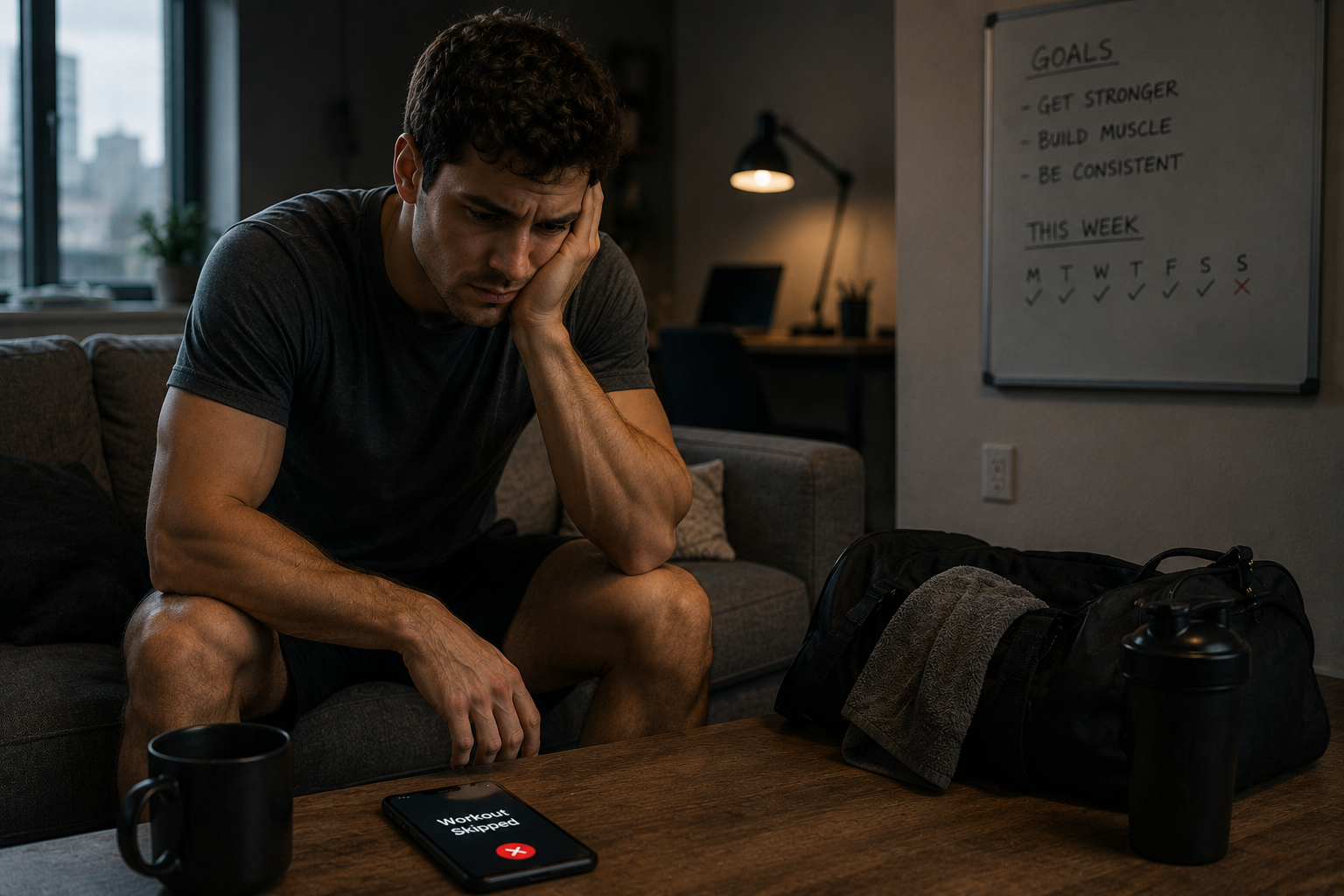
Ever skipped a workout and immediately felt guilty?
For many people, missing a planned training session triggers disappointment, frustration, or even anxiety. Others experience relief from taking a break. But beyond these emotions lies a more interesting question:
What actually happens in your brain when you skip exercise?
The answer is more nuanced than many people think.
Why This Matters Now
Exercise is no longer viewed solely as a tool for improving physical health.
Research increasingly shows that regular physical activity supports:
- Mood regulation
- Stress management
- Cognitive performance
- Emotional resilience
- Long-term mental health
At the same time, busy schedules, hybrid work, family responsibilities, and everyday life make missed workouts inevitable.
Understanding the psychological effects of skipping exercise can help people avoid turning one missed session into weeks of inactivity.
Expert Perspectives
Dr. John Ratey: Exercise Feeds the Brain
Harvard psychiatrist Dr. John Ratey has spent decades studying the relationship between exercise and brain function.
According to Ratey, regular physical activity stimulates the release of neurotransmitters such as dopamine and serotonin, both of which play important roles in mood, motivation, and emotional regulation.
When someone skips a workout, they temporarily miss those neurochemical benefits.
For individuals who exercise consistently, this can sometimes result in:
- Lower mood
- Increased stress
- Reduced motivation
- Greater feelings of anxiety
Ratey also cautions that missing one workout can become psychologically significant if it disrupts an established routine.
From his perspective, maintaining consistency—even through shorter or lower-intensity workouts—is often more valuable than chasing perfect training sessions.
Dr. Linda H. Chmielewski: Movement as a Psychological Anchor
Sports scientist Dr. Linda H. Chmielewski approaches the issue from a physiological perspective.
She argues that movement becomes part of the body's expected routine.
When that routine disappears unexpectedly, both the body and mind may interpret the change as a disruption.
Rather than focusing only on neurotransmitters, Chmielewski highlights the broader psychological effects that can accompany inactivity, including:
- Mental fatigue
- Irritability
- Reduced motivation
- Increased perceived stress
She believes these reactions can become self-reinforcing.
A missed workout lowers motivation.
Lower motivation makes the next workout feel more difficult.
Over time, this cycle can become harder to break.
To interrupt that pattern, she recommends adapting workouts instead of abandoning them entirely whenever life interferes.
Tom Holland: One Workout Never Defines Success
Exercise physiologist Tom Holland offers perhaps the most practical perspective.
Rather than focusing on the biological consequences of missing exercise, he emphasizes mindset.
According to Holland, skipping a workout should not be viewed as failure.
Instead, it should be treated as a normal part of maintaining a long-term fitness lifestyle.
He encourages following an "80-20" approach:
- Be consistent most of the time.
- Allow flexibility when life becomes unpredictable.
Instead of trying to compensate with extreme workouts or self-criticism, Holland recommends simply returning to normal exercise as soon as circumstances allow.
His philosophy prioritizes resilience over perfection.
Editorial Synthesis
Where Experts Agree
Although they approach the topic differently, the experts reach several common conclusions.
They agree that:
- Exercise supports mental health as well as physical health.
- Missing workouts can influence mood and motivation.
- Consistency matters more than perfection.
- A flexible mindset produces better long-term adherence than guilt or self-criticism.
Where Experts Disagree
The primary differences lie in how each expert explains the effects.
Ratey focuses on changes in brain chemistry and neurotransmitter activity.
Chmielewski emphasizes the disruption of established behavioral and physiological routines.
Holland concentrates on psychology, arguing that the interpretation of a missed workout often matters more than the missed workout itself.
Together, these perspectives suggest that biology and mindset both influence how people experience interruptions in training.
Should You Feel Guilty About Missing One Workout?
Probably not.
A single missed workout has virtually no measurable impact on:
- Muscle growth
- Fat loss
- Cardiovascular fitness
- Strength
- Athletic performance
What creates problems is not one missed session but the behaviors that sometimes follow it.
Common patterns include:
- "I already missed Monday, so I'll start again next week."
- Trying to "make up" for missed workouts with excessive training.
- Viewing fitness through an all-or-nothing mindset.
These reactions often cause more long-term disruption than the missed workout itself.
Better Ways to Respond
If you miss a workout, consider a simpler approach.
Instead of dwelling on the missed session:
- Resume your normal schedule.
- Take a short walk if a full workout isn't possible.
- Perform a brief mobility or bodyweight session.
- Focus on maintaining the habit rather than maximizing intensity.
Keeping the routine alive is often more valuable than completing the perfect workout.
Why This Matters
Fitness is built through repeated habits over months and years—not by never missing a session.
Exercise undeniably benefits brain function, emotional health, and stress management, but occasional interruptions are part of every sustainable fitness journey.
The healthiest response isn't guilt or overcorrection.
It's recognizing that consistency is measured over time.
Missing one workout rarely changes your results.
Giving up because you missed one often does.
The goal isn't to exercise perfectly every week—it's to build a routine resilient enough to survive the realities of everyday life.