Opening Question
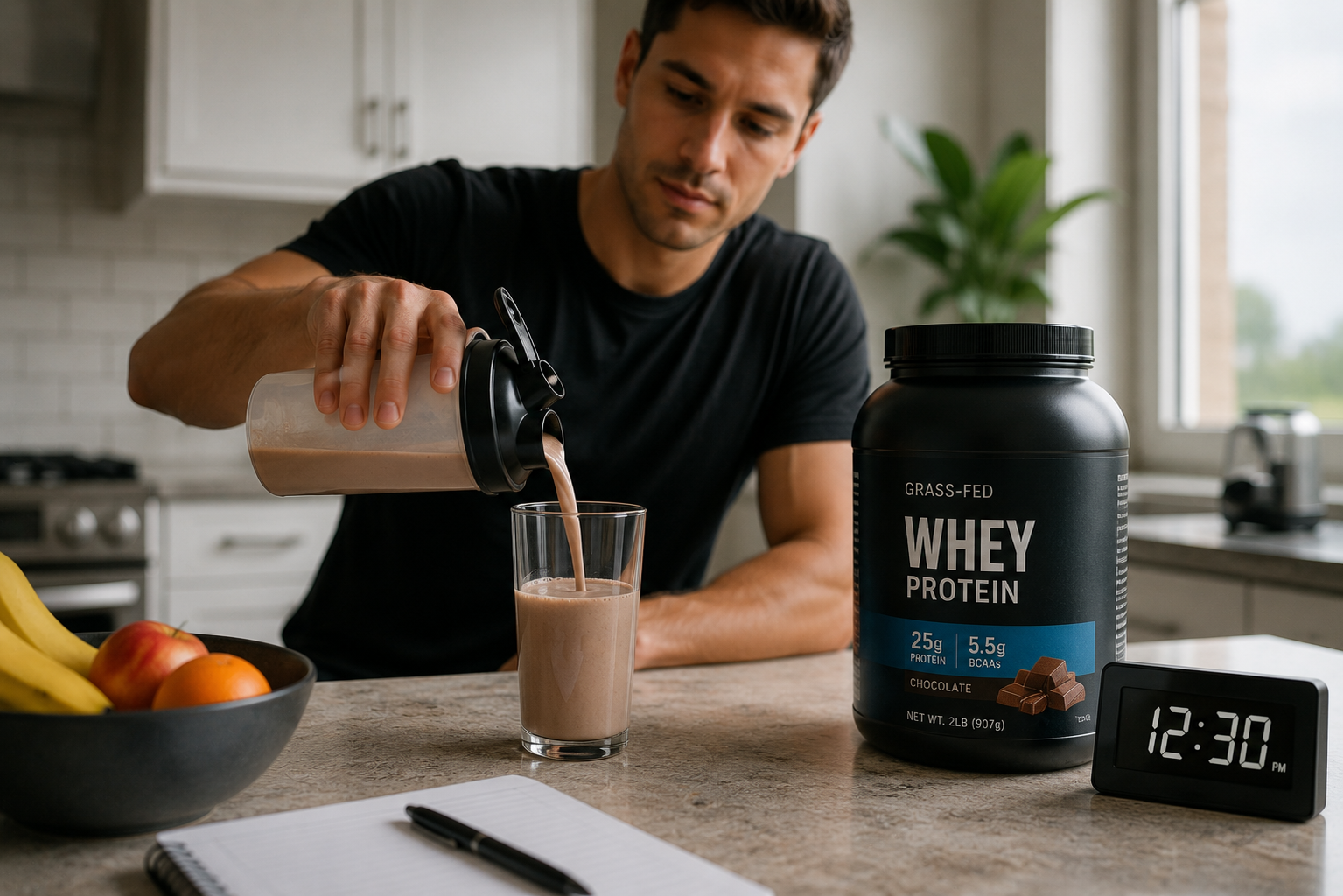
If you've spent any time in a gym, you've probably heard the advice:
"Drink your protein shake within 30 minutes after your workout—or you're missing your gains."
For years, this so-called "anabolic window" has shaped how athletes and fitness enthusiasts plan their meals. But as sports nutrition research has evolved, a more nuanced picture has emerged.
So, does protein timing really matter, or has its importance been overstated?
Why This Matters Now
Interest in nutrient timing has exploded alongside the growth of the fitness industry.
Social media, supplement companies, and fitness influencers frequently emphasize post-workout nutrition, encouraging consumers to believe that every minute after training is critical for muscle growth.
At the same time, scientific research has increasingly challenged this narrative.
Rather than focusing solely on when protein is consumed, many researchers now argue that how much protein you consume throughout the day plays a much larger role in building muscle and supporting recovery.
Understanding this distinction can help athletes prioritize what truly matters while avoiding unnecessary stress over meal timing.
Expert Perspectives
Alan Aragon: Daily Intake Comes First
Nutrition researcher Alan Aragon argues that protein timing has been exaggerated in popular fitness culture.
According to Aragon, total daily protein intake—and how it's distributed across meals—is far more important than consuming protein immediately after exercise.
He explains:
"For most individuals, the window for optimal protein synthesis can stretch several hours post-exercise."
Rather than racing to finish a protein shake the moment training ends, individuals who consistently meet their daily protein requirements are unlikely to sacrifice meaningful muscle growth.
From Aragon's perspective, consistency beats precision.
Renee McGregor: Timing Still Has Practical Value
Sports dietitian Renee McGregor agrees that the traditional anabolic window is much broader than once believed.
However, she argues that protein timing still has practical benefits, particularly for athletes who train frequently or at high intensity.
She explains:
"Ensuring a post-workout protein source can aid faster recovery and muscle repair."
For elite athletes, rapid recovery between training sessions can improve performance.
Still, McGregor emphasizes that post-workout nutrition should complement—not replace—a well-balanced daily nutrition plan.
Meeting overall protein needs remains the primary objective.
James Krieger: Small Advantages Can Matter
Fitness researcher James Krieger takes a slightly different position.
He agrees that daily protein intake drives most muscle growth but believes strategic protein timing can provide an additional advantage for individuals seeking maximum hypertrophy.
He notes:
"The post-exercise period is a key opportunity for those looking to squeeze out every bit of muscle gain."
Research demonstrates that consuming protein around workouts stimulates muscle protein synthesis.
However, Krieger also stresses that these benefits are incremental.
Someone who consistently consumes sufficient protein throughout the day is already capturing most of the available benefits.
Timing simply refines an already solid nutritional strategy.
Editorial Synthesis
Where Experts Agree
Despite slight differences in emphasis, the experts share several important conclusions.
They agree that:
- Total daily protein intake is the primary factor influencing muscle growth.
- Meeting daily protein requirements is more important than perfect meal timing.
- The traditional "30-minute anabolic window" is much wider than originally believed.
- Protein consumed throughout the day effectively supports muscle protein synthesis.
Where Experts Disagree
The primary disagreement concerns the magnitude of protein timing's effect.
Aragon views timing as relatively minor for most people.
McGregor believes it becomes more relevant for competitive athletes and individuals with demanding training schedules.
Krieger argues that while timing offers only modest benefits, those pursuing maximum muscle growth may still benefit from carefully planning protein intake around workouts.
What Does the Research Suggest?
Modern sports nutrition research points toward a balanced conclusion.
Muscle protein synthesis increases after resistance training, but the body remains responsive to dietary protein for several hours following exercise.
This means that missing a protein shake immediately after leaving the gym is unlikely to compromise results—provided adequate protein is consumed later.
Research increasingly supports several practical principles:
- Consume sufficient protein throughout the day.
- Distribute protein across multiple meals.
- Include high-quality protein sources.
- Maintain consistency over weeks and months.
These habits contribute far more to long-term progress than obsessing over a narrow feeding window.
Practical Recommendations
For most recreational lifters, a simple approach is sufficient:
- Aim to meet your daily protein target.
- Include protein in three to five meals throughout the day.
- Eat a protein-rich meal before or after training based on convenience.
- Focus on long-term consistency rather than perfect timing.
Athletes training multiple times per day or preparing for competition may benefit from more structured nutrient timing, but even then, it should support—not replace—sound overall nutrition.
Why This Matters
Protein timing has become one of the most debated topics in sports nutrition largely because it is easy to market.
The reality is less dramatic.
Most evidence suggests that daily protein intake, overall diet quality, and consistent resistance training account for the overwhelming majority of muscle-building success.
Strategic protein timing may provide small performance or recovery advantages, particularly for high-level athletes, but it is not the deciding factor for most people.