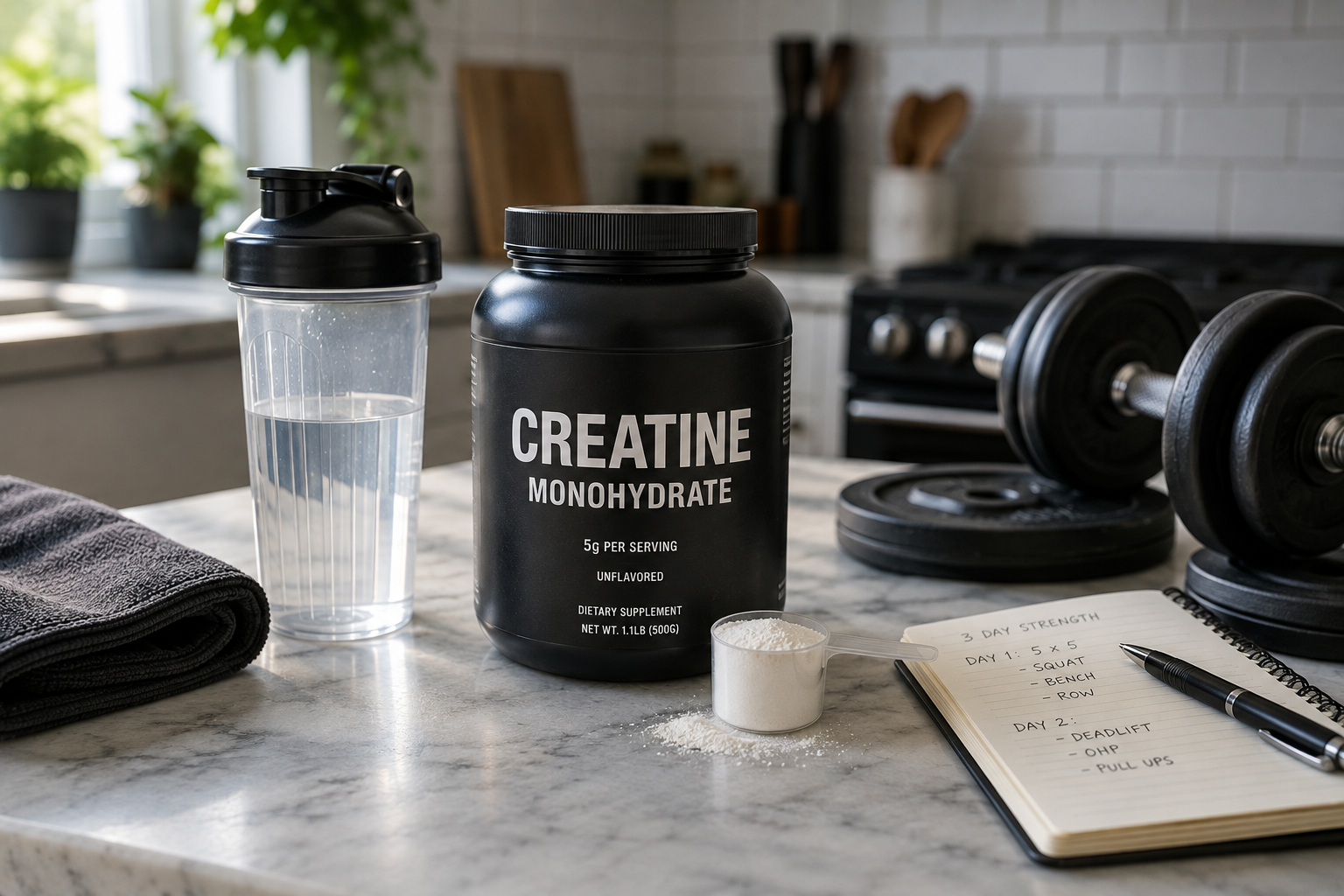
Opening Question
Should you take creatine, or is it just another overhyped fitness supplement?
Despite being one of the most extensively studied supplements in sports nutrition, creatine remains surrounded by misconceptions. Some believe it causes excessive water retention or kidney damage, while others view it as essential for building strength and muscle.
Separating scientific evidence from fitness myths is key to deciding whether creatine fits your goals.
Why This Matters Now
The popularity of supplements has grown alongside social media, where advice often spreads faster than scientific research.
With countless influencers promoting products and conflicting recommendations, many people are unsure whether creatine is genuinely effective or simply another marketing trend.
Fortunately, decades of clinical research provide clear answers about how creatine works, who benefits most, and how to use it safely.
Expert Perspectives
Dr. Alan Aragon: One of the Most Effective Supplements Available
Nutrition researcher Dr. Alan Aragon points to the overwhelming scientific evidence supporting creatine supplementation.
Creatine helps replenish adenosine triphosphate (ATP), the primary source of energy used during short, high-intensity exercise.
By restoring ATP more quickly, creatine allows muscles to perform repeated bouts of powerful activity with greater efficiency.
According to Aragon, research consistently shows improvements in:
- Strength
- Power output
- Muscle growth
- Training performance
- Recovery
He also addresses one of the most common concerns surrounding creatine.
Although some users experience temporary water retention during the first weeks of supplementation, he notes that this effect is generally mild and primarily reflects increased water stored inside muscle cells rather than unwanted bloating.
Dr. Mike Israetel: Consistency Matters Most
Exercise scientist Dr. Mike Israetel emphasizes proper dosing over complicated supplement protocols.
He recommends taking 3 to 5 grams of creatine monohydrate daily, which is sufficient for most people to fully saturate muscle creatine stores over time.
Rather than worrying about precise timing, Israetel argues that consistency is what produces results.
He also notes that creatine remains useful during both muscle-building and fat-loss phases by helping preserve strength and training performance even when calories are reduced.
Dr. Jennifer Case: Benefits Extend Beyond Bodybuilding
Sports physiologist Dr. Jennifer Case highlights that creatine is valuable across a wide range of athletic activities.
While athletes involved in explosive sports such as sprinting, weightlifting, football, or jumping often experience the largest performance improvements, she emphasizes that endurance athletes may also benefit.
Creatine can support:
- Faster recovery
- Improved muscle function
- Better training quality
- Increased ability to perform repeated high-intensity efforts
She rejects the common misconception that creatine is only useful for bodybuilders or elite strength athletes.
Editorial Synthesis
Where Experts Agree
The experts share strong consensus on several key points.
They agree that:
- Creatine improves performance during high-intensity exercise.
- It is one of the most thoroughly researched sports supplements available.
- Recommended daily doses are considered safe for healthy individuals.
- Consistent supplementation works better than inconsistent use.
Where Experts Disagree
Most disagreements involve practical details rather than effectiveness.
Some experts view early water retention as a negligible adjustment period, while others acknowledge that certain users may find it noticeable.
There is also ongoing discussion about supplementation strategies, with some recommending continuous daily use and others occasionally discussing cycling creatine, although current evidence generally suggests cycling is unnecessary for most healthy users.
Common Myths About Creatine
Several misconceptions continue to circulate despite extensive research.
Myth: Creatine is a steroid.
Reality: Creatine is a naturally occurring compound found in muscles and certain foods. It is not an anabolic steroid.
Myth: Creatine damages healthy kidneys.
Reality: Current research has consistently found recommended doses to be safe for healthy individuals, although people with existing kidney disease should consult a healthcare professional before supplementation.
Myth: Creatine only works for bodybuilders.
Reality: Athletes across many sports—and recreational exercisers—may benefit from improved strength, recovery, and high-intensity performance.
Who May Benefit Most?
Creatine is commonly used by people who participate in:
- Resistance training
- Powerlifting
- Olympic weightlifting
- Sprinting
- Team sports
- CrossFit-style training
- High-intensity interval training
It may also provide benefits for individuals seeking to maintain muscle mass and strength as they age, although supplementation decisions should always consider personal health circumstances.
Why This Matters
Few sports supplements have been studied as extensively as creatine, and few demonstrate such consistent performance benefits.
When combined with progressive training, adequate protein intake, sufficient sleep, and overall good nutrition, creatine can help improve strength, support muscle growth, and enhance recovery without requiring complicated protocols.